training
Safe Exercises for Seniors That Work
Why Exercise Matters More as We Age
Exercise isn’t just about looking good or having big biceps. As we get older, it becomes one of the most important things we can do for our health and independence. Staying active helps you feel better mentally, reduces the risk of chronic illness, and makes everyday tasks easier.
On the mental side, regular exercise can help prevent and manage depression and anxiety. It also supports brain health, reducing the risk of cognitive decline and conditions like Alzheimer’s and dementia. Simply put, moving your body keeps your mind sharp.
Physically, exercise is one of the best defences against heart disease, stroke, type 2 diabetes and osteoporosis. It helps manage weight, supports healthy blood pressure, and improves circulation. Strong muscles and bones mean fewer falls, better balance, and more confidence doing the things you love.
If you want to keep living life on your own terms, exercise is non-negotiable.
How Much Exercise Should Seniors Aim For?
For Australians aged 65 and over, the guidelines recommend at least 30 minutes of moderate physical activity most days. That could be broken up into shorter sessions throughout the day.
On top of this, aim for strength-based exercises at least two to three days a week. These help maintain muscle mass and bone strength – both of which naturally decline with age if you don’t train them.
If you’re new to exercise, start slow and build up. Even swapping 30 minutes of TV for a short walk or light strength session can make a difference.
Safe Exercises for Seniors – What to Focus On
When designing a workout, it’s best to target the major muscle groups: chest, legs, hips, back, shoulders, and arms. These are the areas that make the biggest difference to your independence and day-to-day function.
Here’s how you can train each one safely and effectively.
Chest
Dumbbell press – Using light to moderate weights, this can be done on a flat or inclined bench. An incline can be more comfortable if lying completely flat is difficult.
Why it matters: Strong chest muscles help you push open doors, reach for items, and maintain good posture.
Legs
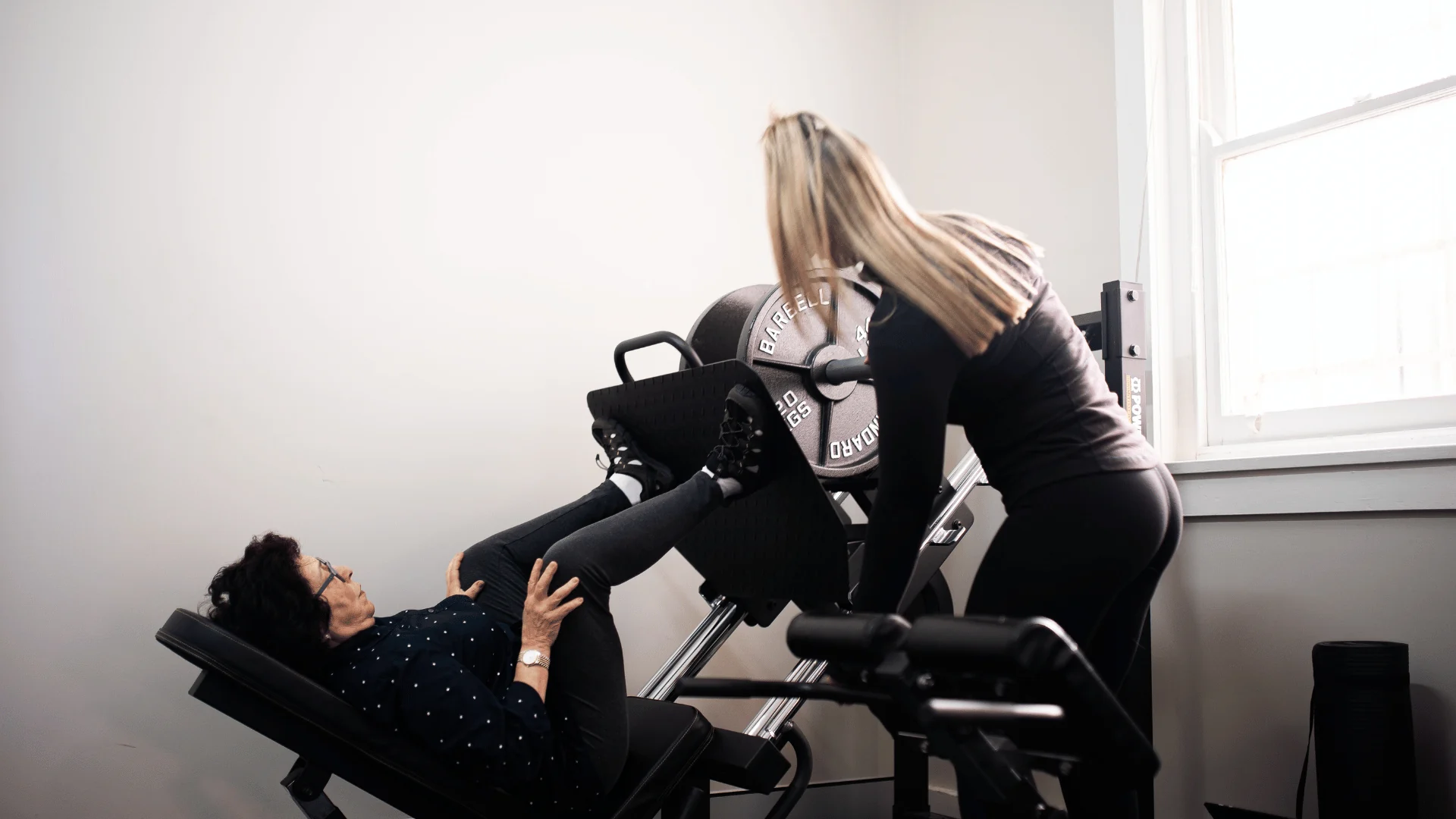
Squats – These strengthen your quads, hamstrings, and glutes, which are vital for walking, climbing stairs, and standing up from a chair.
You can do squats with bodyweight, holding a light dumbbell, or using a wall or chair for support.
Why it matters: Strong legs keep you mobile and help prevent falls.
Hips
Standing hip extensions, side-lying hip raises, and wide-stance goblet squats target the hips and glutes.
Why it matters: Hip strength reduces stiffness, supports your lower back, and keeps your walking pattern smooth.
Back
Dumbbell bent-over rows and lying Y raises help strengthen the muscles that keep your posture upright and protect your spine.
Why it matters: A strong back reduces the risk of injury, improves posture, and helps with lifting and carrying.
Shoulders
Dumbbell shoulder press – Builds strength in the deltoids and trapezius, improving overhead mobility and bone density.
Dumbbell front raise – Targets the front of the shoulders, making it easier to lift and carry items.
Why it matters: Healthy shoulders make reaching, lifting, and daily activities much easier.
Arms
Dumbbell hammer curls strengthen the biceps for lifting.
Tricep rope extensions target the back of the arms, essential for pushing up from a chair or bed.
Why it matters: Arm strength keeps everyday tasks pain-free and manageable.
Tips for Exercising Safely
- Start light – Use weights you can control easily.
- Focus on form – Quality beats quantity every time.
- Use support if needed – Chairs, walls, or railings can help with stability.
- Warm up and cool down – A few minutes of gentle movement and stretching goes a long way.
- Listen to your body – Mild muscle fatigue is fine, sharp pain is not.
Staying Consistent
The best exercise is the one you’ll keep doing. Choose activities you enjoy – walking with a friend, swimming, tai chi, or a small group strength class. Social exercise can also help with motivation and accountability.
Think of exercise as an investment. Every session helps you maintain independence, improve your mood, and add quality years to your life.
Bottom line: Safe exercises for seniors aren’t just about preventing problems – they’re about making sure you can keep living the life you want, on your own terms. Start small, stay consistent, and keep moving.
References
[1] Australian Government Department of Health and Aged Care (2022) For older Australians (65 years and over). Available at: https://www.health.gov.au/topics/physical-activity-and-exercise/physical-activity-and-exercise-guidelines-for-all-australians/for-older-australians-65-years-and-over
[2] The best core exercises for older adults (2021) Harvard Health. Available at: https://www.health.harvard.edu/staying-healthy/the-best-core-exercises-for-older-adults
[3] ConversionFormula (2025) Senior fitness: Squat Exercise Benefits for Seniors, Westmont Living. Available at: https://westmontliving.com/blog/westmont-of-cypress/health/senior-fitness-squat-exercise-benefits-for-seniors/
[4] Dumbbell & Resistance Band exercises for seniors (2023) Lifeline. Available at: https://www.lifeline.ca/en/resources/dumbbell-and-resistance-band-exercises-for-seniors/
[5] Older adult activity: An overview (no date) Centers for Disease Control and Prevention. Available at: https://www.cdc.gov/physical-activity-basics/guidelines/older-adults.html
[6] Sites, S. (2024) 4 essential chest exercises to keep seniors active, Discovery Village. Available at: https://www.discoveryvillages.com/senior-living-blog/4-essential-chest-exercises-to-keep-seniors-active/
[7] Restivo, J. (2024) Effective exercises for building a strong back, Harvard Health. Available at: https://www.health.harvard.edu/exercise-and-fitness/effective-exercises-for-building-a-strong-back
[8] Seguin, R. (2003) ‘The benefits of strength training for older adults’, American Journal of Preventive Medicine, 25(3), pp. 141–149. doi:10.1016/s0749-3797(03)00177-6.