
training
What Happens in the First 30 Days of Strength Training
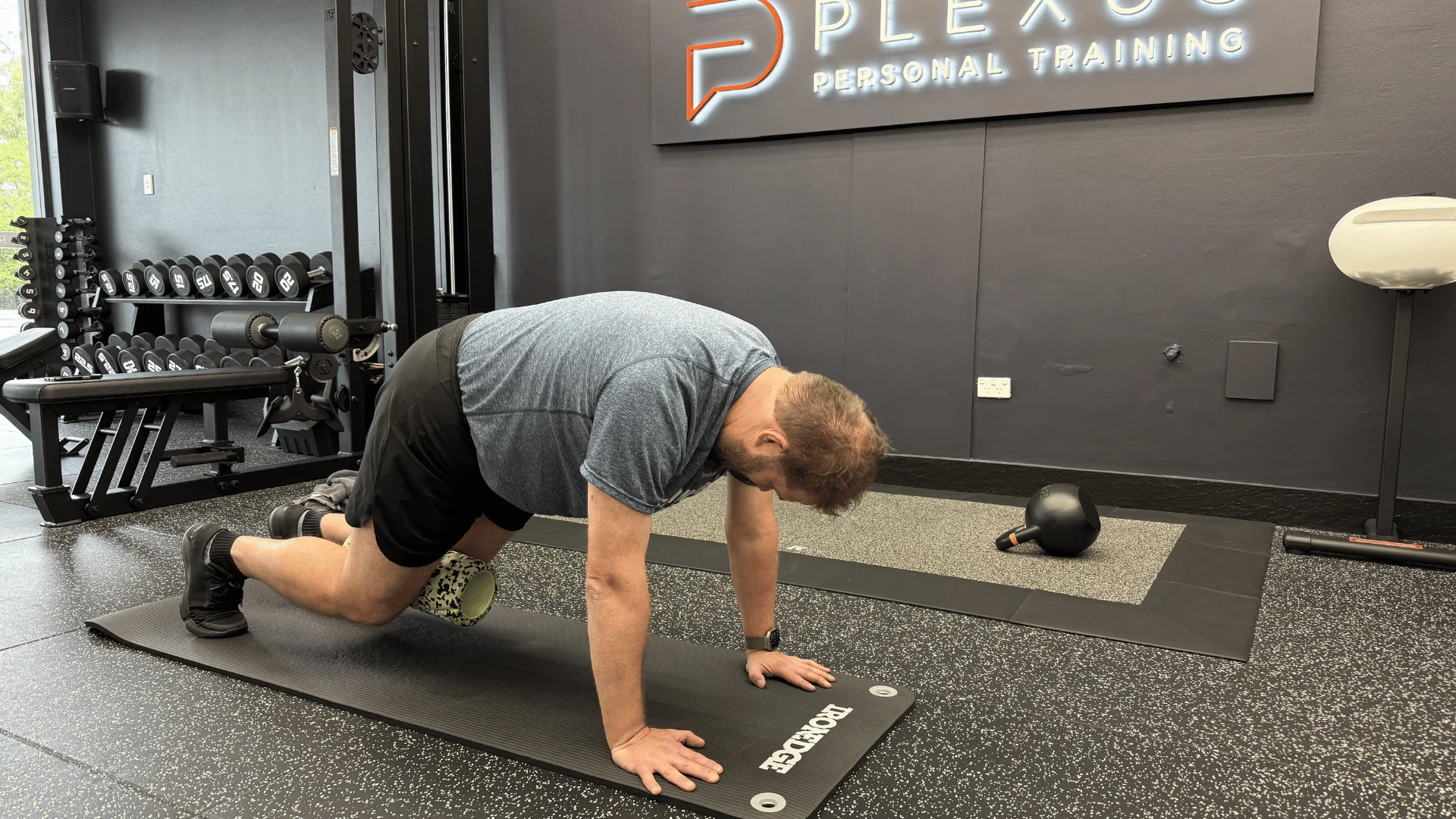
Before Andy walked through the door at Plexus Roseville Chase for his first session, he was scared.
Not nervous-excited. Actually scared.
“I was genuinely worried about how badly it might go. I know I’m not in great shape and that something needs to change, but knowing that doesn’t magically make it less scary. If anything, it adds fear.”
Andy is a middle-aged dad. He’d never really trained before. He applied for our transformation program in April, won a spot, and showed up for session one carrying everything most people carry into a gym for the first time – the worry about injury, the fear of judgement, the quiet certainty that he probably didn’t belong there.
He’s also the reason I wanted to write this post. Because what happens in the first 30 days of strength training is almost never what people expect. And if more people knew what was actually coming – week by week, physically and mentally – far fewer would talk themselves out of starting.
Week One: It’s Not Muscle Yet – And That’s the Point
Here’s what most people don’t know going in: the strength gains you feel in the first week have almost nothing to do with muscle.
What’s actually happening is neural adaptation. Your central nervous system is learning – figuring out how to recruit the right muscle fibres in the right sequence for movements it hasn’t done before. The weights feel hard not because you’re weak, but because the wiring between your brain and your muscles is being built in real time.
This is why week one feels deceptively hard for some things and surprisingly manageable for others. Andy found exactly that. Some things he expected to struggle with, he handled fine. Others he thought would be easy exposed real gaps.
The core work at the end of his first session was the moment that landed hardest.
“We got to the core work and that was very humbling. I was crap at it – and even George was surprised.”
The exercise was a static bear crawl isometric hold – a position that demands full-body tension and deep core stability. Andy couldn’t hold it. Not because he wasn’t trying. Because that specific neuromuscular connection hadn’t been trained. His body had simply never been asked to do it.
His response to that matters.
“It exposed a real weakness. I needed to really remind myself that it wasn’t failure. It was information. Very clear, very honest information about where I need to work.”
That reframe – weakness as information rather than verdict – is one of the most important mental shifts in the entire first month.
At Plexus we see this in virtually every new client. The first session is a baseline, not a benchmark. The body is being assessed, not tested. And almost universally, people discover they have more in some areas and less in others than they assumed.
Week Two: The Soreness Settles – and Something Shifts
The day after session one, Andy’s legs had opinions.
“Walking downstairs was an experience. It was uncomfortable, but also oddly reassuring. It confirmed that I had actually done something – that the effort was real and not just theoretical.”
That specific muscle soreness – DOMS, delayed onset muscle soreness – peaks around 24 to 48 hours after your first couple of sessions and is a normal part of the adaptation process. It’s not injury. It’s your muscle fibres responding to a new stimulus, experiencing micro-damage that the body repairs and reinforces over the following days.
The soreness from sessions three and four is noticeably less than after session one. That’s not because you’re working less hard. It’s because your body is already adapting.
Andy came back for session two two days after session one – sore legs and all. Then session three two days after that. That consistency in week two is everything.
In session two, George introduced the dead hang.
Andy’s internal reaction:
“You’re kidding yourself mate. Holding my entire body weight with just my hands. That’s wildly optimistic, probably borderline delusional.”
He expected to drop in seconds. Then ten seconds passed. Then twenty. Then thirty-one.
“Once I committed, something in my brain flipped from ‘this is impossible’ to ‘don’t you dare let go.’ I wanted to see how far I could push it. And somehow, I did way more than I’d already decided I was capable of.”
This is one of the most consistent things we see in the second week of training. Not dramatic physical transformation – but a gap opening up between what someone believed they were capable of and what they actually are. That gap is where the real motivation lives.
“It proved that I’m stronger than I think, both mentally and physically – and that my brain gives up long before my body actually needs to.”
Weeks Three and Four: The Numbers Start Moving
By week three, the neural pathways are more established. Movements that felt awkward in week one start to feel natural. And for the first time, the weights themselves start to shift.
This is when clients at Plexus start reporting what Andy described after his dead hang – a quiet competitiveness with themselves. A wanting to beat last session’s number, then beat it again.
The average new client at Plexus improves their strength by 30% in the first 30 days. That’s what we measure, session by session, across every client who goes through our program. The load they can move, the reps they can sustain, the positions they can hold. All of it tracked.
For Andy, the baseline was set in session one. The bear crawl hold that floored him in week one will become a benchmark he returns to. The dead hang time he couldn’t have predicted will be something he competes against every fortnight.
Energy outside the gym shifts in weeks three and four as well. Sleep often improves. Daily tasks – carrying things, climbing stairs – start to feel different. This is the part people don’t expect and undervalue: strength training changes how your body operates all day, not just in the 45 minutes you’re in the studio.
What the First 30 Days Is Really For
Andy came in expecting to find out how unfit he was. He left session one with something more useful – a clear, honest baseline. Where the strength already exists. Where the gaps are. And the first evidence that his own assessment of himself had been underselling him.
“I’m not as fragile as I’d been telling myself – and honestly, that might be the biggest win of all.”
The first 30 days of strength training are not about transformation. They’re about establishing truth. What your body can do right now. Where it needs work. And whether you’ll show up consistently enough to find out what’s possible.
Andy was sore after session one. He showed up for session two anyway.
That’s the whole thing.
If you’ve been sitting on starting – whether it’s fear of injury, fear of the gym environment, or just not knowing what to expect – a free strategy call with me is the first step. Just an honest conversation about where you’re starting from. If all aligns – I’ll then see if personal training at Roseville Chase or Pymble will be closest location for you, and which trainer will be the best fit.