
lifestyle
How Many Calories Does a 45-Minute Strength Session Burn?
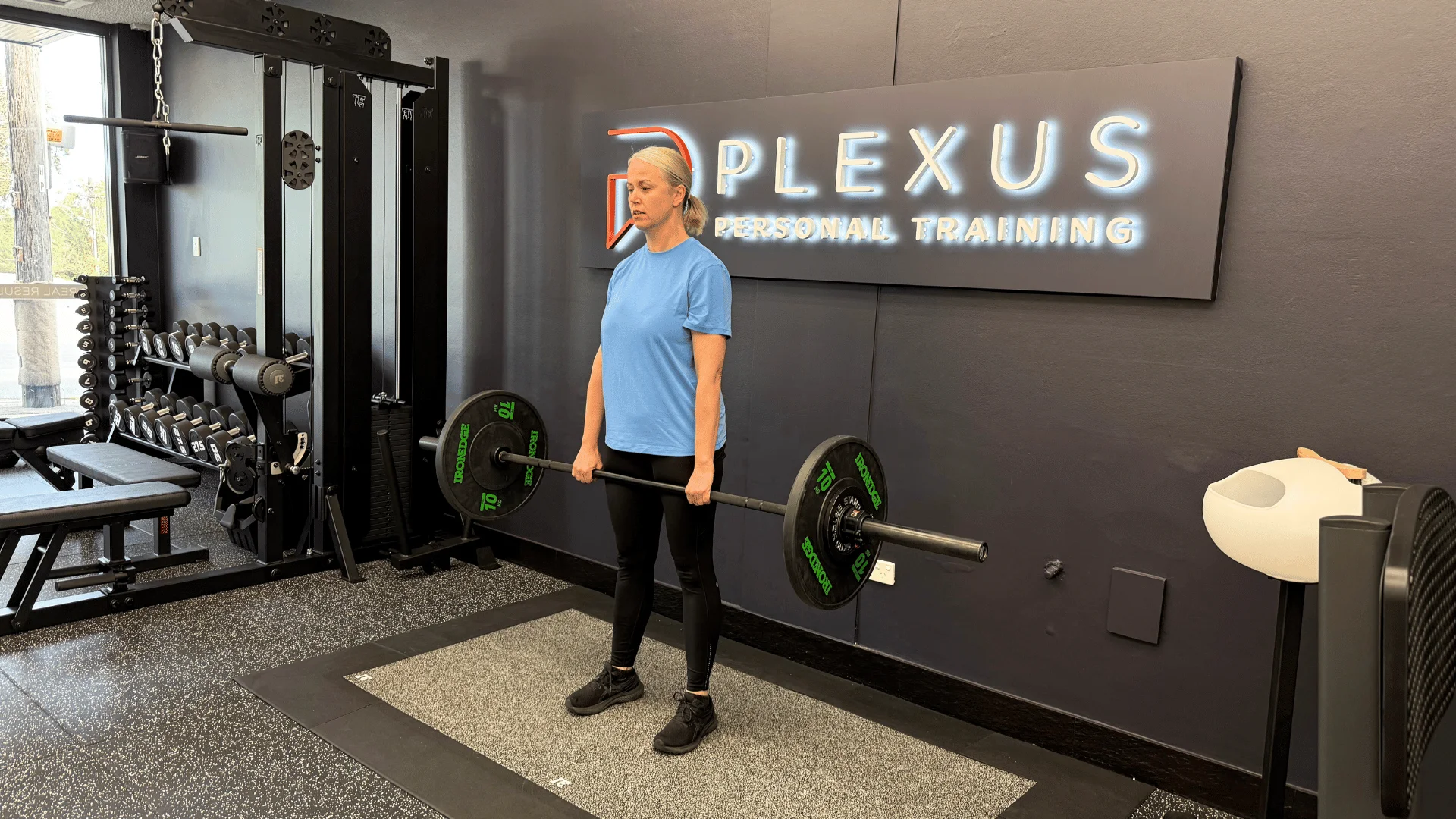
At Plexus, our sessions are 45 minutes long – and one of the most common questions we get is: “How many calories do I actually burn in a session?”
It’s a fair question. Whether your goal is to lose fat, get stronger, or just stay healthy, understanding where your energy goes can help you make smarter choices. But let’s clear up one thing right away – most people overestimate how many calories they burn during strength training.
So, how many calories are burned during strength training?
For a typical 45-minute strength session, most people burn between 150 and 350 calories depending on body weight, exercise intensity, rest time, and muscle groups trained.
- A 70kg person might burn around 200-250 calories.
- A 90kg person might burn around 300-350 calories.
That’s less than what most people think. It’s roughly equivalent to a brisk walk or a casual bike ride. Compare that to a 45-minute cardio session – say, running, rowing, or cycling at moderate intensity – and you’d be looking at 400-600 calories burned.
So yes, if we’re comparing apples to apples, cardio burns more calories in the moment. But that’s not the whole story.
Why strength training is still the better long-term investment
Strength training does something cardio doesn’t: it builds muscle. And that’s where the real magic happens.
The more lean muscle you have, the higher your basal metabolic rate (BMR) – which is the number of calories your body burns just to keep you alive. This means you’ll be burning more calories every hour of the day, even when you’re sitting at your desk or sleeping.
Cardio helps you burn calories now.
Strength training helps you burn calories forever.
Understanding your total daily energy expenditure (TDEE)
To put this in perspective, here’s a simple breakdown of where your daily energy burn usually comes from:
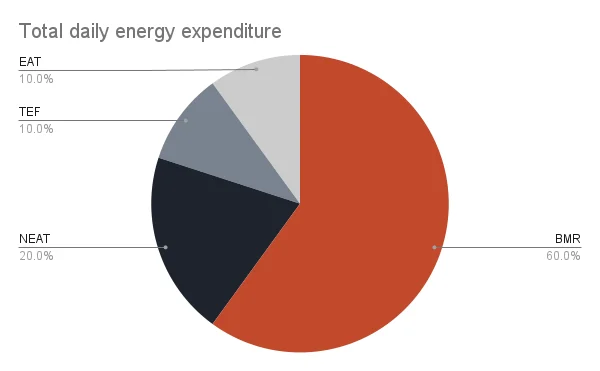
| Category | Description | % of Daily Burn |
| Basal Metabolic Rate (BMR) | Energy your body uses to stay alive (breathing, digesting, repairing cells) | ~60-70% |
| Non-Exercise Activity Thermogenesis (NEAT) | Incidental movement – walking, fidgeting, daily activity | ~15-20% |
| Thermic Effect of Food (TEF) | Energy used to digest and process food | ~10% |
| Exercise Activity (EAT) | Planned workouts like strength or cardio | ~5-10% |
This shows that even if you train for 45 minutes, most of your calorie burn doesn’t come from exercise – it comes from being alive.
That’s why building muscle is so powerful. More muscle increases your BMR, which means that even your “doing nothing” time becomes more metabolically expensive.
The afterburn effect: calories burned after you leave the gym
Another advantage of resistance training is the EPOC effect (Excess Post-Exercise Oxygen Consumption). After an intense strength session, your body needs extra energy for up to 24 hours to repair muscles, replace energy stores, and adapt to training stress.
While it won’t double your calorie burn, it can add another 5-10% to your total energy expenditure – something steady-state cardio doesn’t deliver in the same way.
Beyond calories: the benefits you can’t see on a tracker
Focusing only on “calories burned” misses the bigger picture. Strength training provides benefits that go far beyond fat loss, including:
- Improved bone density, reducing your risk of osteoporosis as you age.
- Better posture and joint health, helping you move well for life.
- Increased strength and confidence, which translates into everyday energy and independence.
- Better metabolic health, improving insulin sensitivity and long-term fat management.
And of course – feeling stronger, looking leaner, and living better.
Cardio still matters
This isn’t to say you should skip cardio altogether. A balanced approach that includes both cardio and strength training is ideal.
Cardio supports heart and lung health, helps with endurance, and boosts overall fitness. Strength training, on the other hand, ensures that your body composition improves – meaning more lean muscle, less fat, and a higher metabolism.
Think of cardio as the spark and strength training as the engine. You want both for a healthy, sustainable body.
The sustainable fat loss equation
When it comes to losing fat and keeping it off, strength training is essential. Cardio may help you drop weight faster, but without muscle, your metabolism slows down – making it harder to keep the weight off.
Strength training builds a stronger, more efficient body that burns more calories over time. That’s why we always tell our clients at Plexus:
“Don’t just chase calorie burn – chase strength.”
By focusing on getting stronger, you’ll create lasting results that don’t rely on endless cardio sessions or strict diets.
The bottom line
A 45-minute strength session might burn around 200-350 calories, while a cardio session of the same duration might burn 400-600. But the difference ends there.
Strength training pays dividends well beyond the workout – by increasing your daily calorie burn, improving your health, and helping you build a body that supports long-term fat loss and vitality.
Start your strength journey at Plexus
At Plexus, we specialise in 45-minute personal training sessions that are efficient, private, and built around your goals. Our science-backed programs help you build muscle, boost your metabolism, and feel stronger than ever – without wasting hours in the gym.
If you’re ready to train smarter (not just harder), book a session with us today and see how quickly your strength – and your results – can grow.
References
[1] Omni Calculator. Calories burned weight lifting calculator.
https://www.omnicalculator.com/sports/calories-burned-weight-lifting
[2] Fitness First Australia. How many calories are you really burning?
https://www.fitnessfirst.com.au/get-there/how-many-calories-are-you-really/
[3] MyProtein. How many calories are burned during weight lifting?
https://au.myprotein.com/blog/training/how-many-calories-are-burned-during-weight-lifting/
[4] TDEE Calculator. https://www.calculator.net/tdee-calculator.html